
In almost every onboarding call with a new e-shop client, the same question comes up: "Aren't we going to run Advantage+ Shopping? Everyone's running it now."
We get it. Advantage+ Shopping (now officially Advantage+ Sales Campaigns after Meta's rename) is the flagship automated campaign type for e-commerce. Meta themselves claim it delivers 17% more purchases compared to manual shopping campaigns.
But that doesn't mean it's right for everyone. There are clear criteria for when it works — and when it burns budget without results.
What Advantage+ Shopping is (quickly)
Before 2022, running Meta for e-commerce meant separately setting up: - Cold prospecting campaigns with interest-based audiences - Lookalike campaigns from customer lists - Retargeting campaigns with custom audiences - Catalog ads with dynamic product feeds
Advantage+ Shopping rolls all of that into one campaign. You provide: - Budget - Product catalog - Up to 150 creative combinations - Existing customer cap (what % goes to retargeting)
And Meta's AI decides the rest: who to target, where, with which creative, at what time.
The minimum requirements for it to work
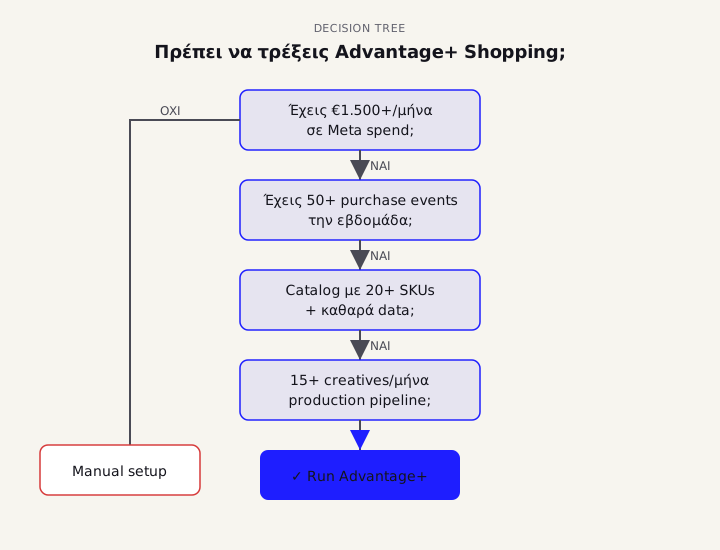
Based on the standards circulating in the industry (Adligator, Stackmatix, official Meta guidance):
1. Budget — enough for the AI to exit the learning phase
Meta recommends a daily budget of at least 50x your target CPA. So if you're targeting a €30 CPA, you need ~€50-100/day minimum to give the algorithm enough to learn.
Translated to the Greek market: if you don't have at least €1,500-3,000/month Meta spend, Advantage+ usually won't exit the learning phase before your budget runs out.
2. Product catalog with 20+ SKUs and clean data
Advantage+ feeds on catalog data. If you have 5-10 products, the AI doesn't have enough variety to work with. If your product titles are "Product A1", descriptions are blank, and prices are wrong, you're toast.
3. At least 50 conversion events per week
This is the critical number. Meta needs 50 purchase events/week to exit the learning phase. As of Q1 2026 this became a strict requirement (source: OptiFOX 2026 Meta best practices).
If you don't hit it, the campaign stays in perpetual learning, with unstable performance.
4. Creative volume — 15-50+ variations
You used to be able to start with 5 creatives. Now Meta gives you room for up to 150 creative combinations, and the algorithm needs at least 15-50 active variations to find the winners.
If you're a solo founder who shoots 2-3 photos a month, this isn't realistic. It requires a content pipeline — UGC, video, carousels, statics, multiple angles.
5. Solid tracking — Pixel + Conversions API
Pixel-only tracking has been broken since iOS 14. If you're not running CAPI alongside Pixel, Meta is missing a significant chunk of attribution data — and without accurate data, the algorithm makes poor decisions.
If you're not sure your tracking is working, book an audit — it's one of the first things we check.
When you SHOULDN'T run Advantage+
There are specific cases where manual structure delivers better results:
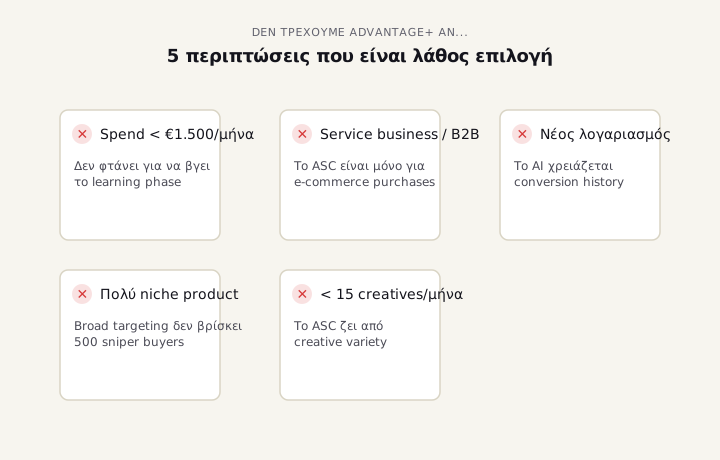
A) Spend below €1,500/month
Not enough to exit learning phase. Better off with a standard sales campaign with broader audiences and manual creative testing.
B) Service-based business / B2B / lead generation
Advantage+ Shopping is purpose-built for e-commerce purchase optimization. If you're after leads, demos or calls, you want a regular campaign with the Lead Gen objective, not Advantage+.
C) New account with no conversion history
Just like with Google's Performance Max, Advantage+ needs data to learn. On a zero-history account, you're better off building campaigns with a broader manual structure first.
D) Very niche product with a specific audience
If you're selling a specialized tool to 500 sniper customers, Advantage+'s broad AI targeting won't find them properly. Manual interest targeting + lookalikes will work better.
E) You can't produce 15+ creatives per month
Not worth it. Advantage+ lives or dies by creative variety.
How to set it up properly (if you meet the criteria)
You're sure it fits? Here's the setup:
-
Existing customer budget cap at 25-30%. If you leave the default "no cap", the AI will pull all budget toward retargeting (because that converts more easily). Force it to find new customers.
-
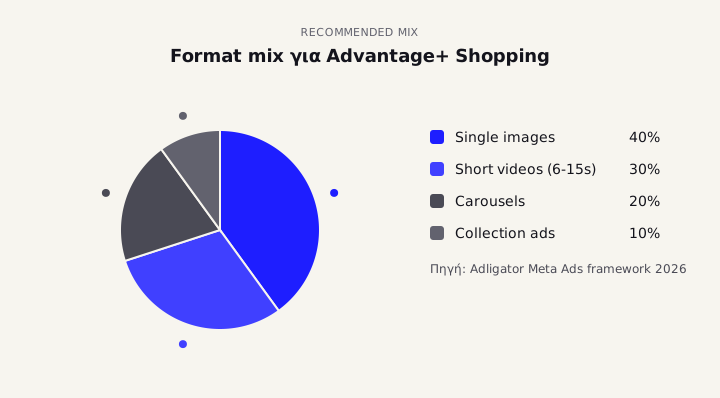
Upload ALL eligible creatives — not 5, start with 15-30. Mix: 40% single images, 30% short videos (6-15 sec), 20% carousels, 10% collection ads (Adligator framework).
-
7-day click + 1-day view attribution window. Standard for e-commerce. The 1-day view captures users who saw the ad and bought the same day without clicking.
-
Don't touch anything for the first 7 days. Every edit resets the learning phase and starts re-training from scratch.
-
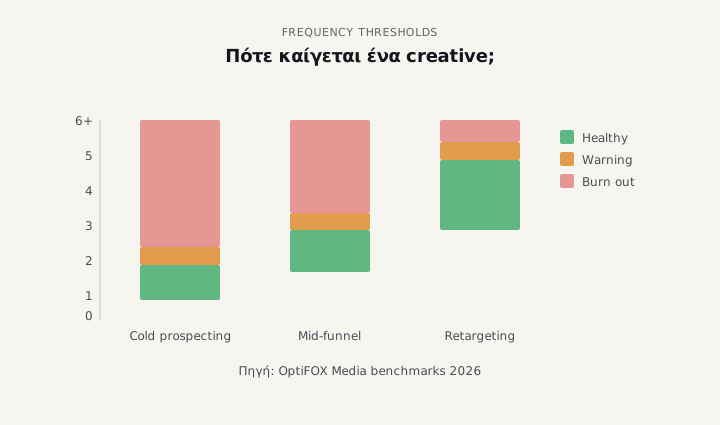
Refresh creative every 2-3 weeks. Frequency between 1.8-3.0 is healthy. If it goes above 3.5+, feed in fresh creatives before expanding to new audiences.
What Advantage+ still doesn't do
There are limitations you should know:
- No demographic targeting beyond country and age range
- You can't fully exclude existing customers (only cap them)
- No placement selection — ads go wherever the AI thinks is best
- No granular reporting — you see aggregate performance, not full placement-level breakdowns
Conclusion
Advantage+ Shopping is like driving an automatic transmission car: brilliant when you know automatic suits your route. Otherwise, slower than manual.
In Greek markets we see it work well for: - E-shops with €3,000+/month Meta spend - Catalog of 30+ products - Shopify or WooCommerce with proper CAPI - Brands that can produce enough UGC and static creatives
If you're below this profile, you don't need Advantage+ — you need solid manual campaigns with a different strategy.
If you're not sure which category you fit, book a free audit. We'll tell you straight: is it worth it for you, or is it a waste of time.
Sources
- Advantage+ Shopping Campaigns — Meta for Business (official)
- Adligator — Meta Advantage+ Shopping Campaigns Setup & Optimization Guide 2026
- Stackmatix — Meta Advantage+ Shopping Campaigns: Setup, Strategy, and Results
- OptiFOX Media — Meta Ads Best Practices 2026
- Bïrch — Understanding Meta's Advantage+ Sales Campaigns 2025