
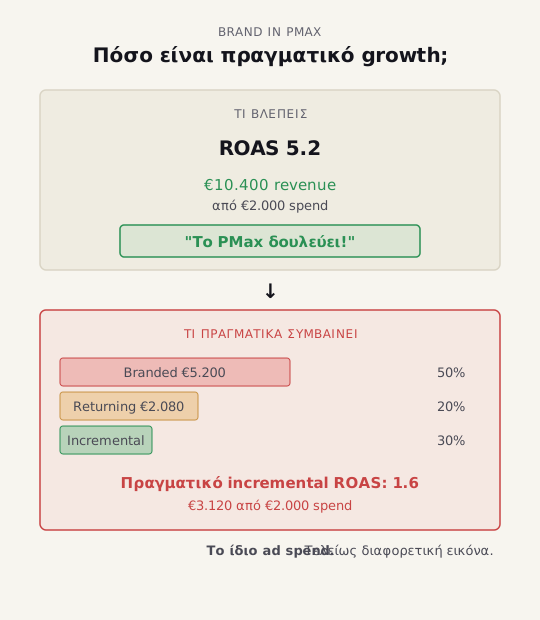
One of the sneakiest problems in Performance Max is that it can show a great-looking ROAS — while a meaningful share of that ROAS is actually coming from branded traffic.
Meaning users who were already searching for your brand, or were already very close to buying.
That doesn't make branded traffic worthless. It just means you need to know what you're paying for. If Performance Max is taking credit for users who would have come through organic, direct or brand search anyway, your ROAS is less impressive than it looks.
Want to know whether your PMax ROAS is being inflated by branded traffic? At Qutik we evaluate PMax beyond the surface — branded vs non-brand contribution, feed, margins, new customers and blended profitability. Book a free Google Ads audit and find out whether your ROAS is real or inflated.
What branded search is
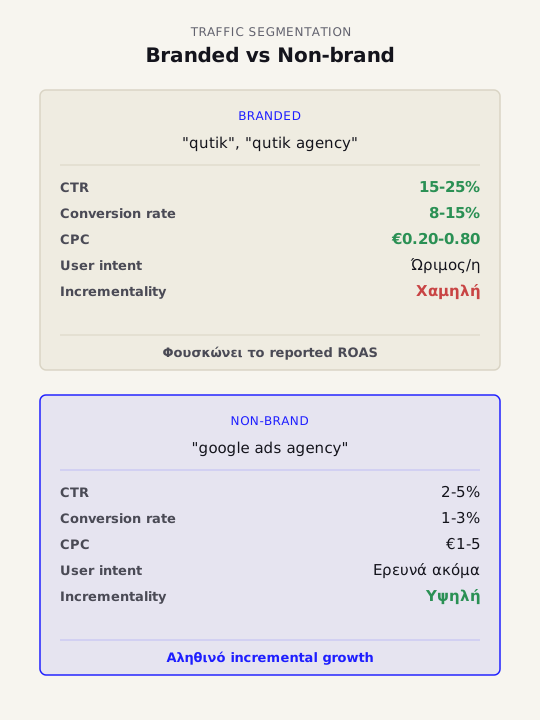
A branded search is when someone types your brand name, or terms very close to it, into Google.
Examples:
- "qutik"
- "qutik digital marketing"
- "brandname shoes"
- "brandname discount"
- "brandname offers"
That user isn't the same as someone searching generically for "women's dresses" or "google ads agency".
They already know who you are. So the conversion is much easier.
Why branded traffic inflates ROAS
Branded traffic typically has:
- a higher conversion rate,
- a lower CPC,
- more trust,
- a stronger purchase intent,
- a much shorter path to purchase.
If a PMax campaign captures a lot of branded traffic, the ROAS can look spectacular.
The real question is: did PMax create those sales, or did it just take credit for demand that already existed?
The real question: incrementality
The keyword here is incrementality.
That is: how many sales actually came in because of the campaign?
If you spend €1,000 and bring back €5,000 in revenue, the reported ROAS is 5.
But if €3,000 of that would have come through anyway via organic, direct or brand demand, the campaign's incremental value is much smaller than the headline ROAS suggests.
You don't need to swing to the opposite extreme and treat all branded traffic as worthless. You just need to read the numbers honestly.
How to tell if PMax is eating branded traffic
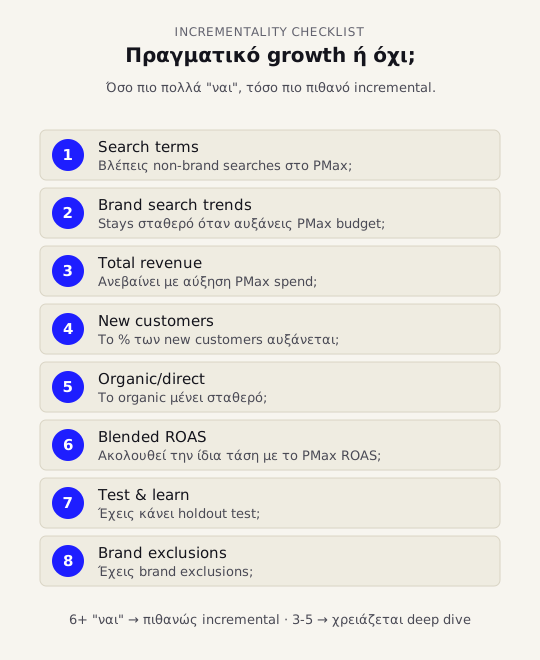
Look at:
- search-term insights,
- brand search trends in Google Trends,
- your existing brand vs non-brand Search campaigns,
- organic branded traffic,
- direct traffic,
- total revenue trend,
- new vs returning customers,
- what happens when you increase or cut PMax budget.
If you scale PMax budget up and total revenue doesn't move proportionally, you're probably just reshuffling existing demand.
Brand exclusions and control
Depending on the account and the available settings, you can use brand exclusions or restructure your campaigns to give yourself proper control over branded vs non-branded demand.
The goal isn't always to exclude the brand everywhere. The goal is to know what you're measuring.
On some accounts, brand protection is genuinely important. On others, branded traffic is masking poor non-brand performance. This is one of the patterns we cover in why PMax isn't delivering.
When paying for branded traffic does make sense
There are real cases where paying for branded clicks is the right move:
- when competitors are bidding on your brand name,
- when you want full control of the messaging,
- when you have specific promos you want to surface,
- when your organic listing isn't strong enough,
- when brand search has high commercial value.
But that should be a deliberate decision — not something happening invisibly inside PMax.
How to evaluate PMax more honestly
Don't stop at campaign-level ROAS.
Look at:
- blended ROAS,
- total revenue trend,
- new-customer CAC,
- branded vs non-branded contribution,
- margin by category,
- product-level performance,
- organic / direct cannibalisation,
- repeat-purchase behaviour.
PMax should be judged as a piece of the overall business, not in isolation. See CPC and CPM benchmarks for 2026 to ground what's reasonable for your category.
Conclusion
Performance Max can drive genuine growth. It can also quietly take credit for demand that was already there.
If you're not checking branded contribution, you can think you're scaling when in reality you're just paying to reach customers who would have found you anyway.
The point isn't to blindly cut branded traffic. The point is to know how much of your ROAS is incremental and how much is existing demand.
FAQ
What is branded search in Google Ads?
A branded search is when someone types your brand name, or a very close variation, into Google — meaning they already know your business.
Why does branded traffic inflate ROAS?
Because branded users typically have higher purchase intent, a higher conversion rate and more trust in the brand — so they convert at a much higher rate than cold traffic.
Is it bad to pay for branded clicks?
Not always. There are valid reasons (brand protection, message control, promo coverage). The problem is not knowing how much branded traffic is propping up your reported ROAS.
How do I check if PMax is taking branded traffic?
Look at search-term insights, brand-search trends, organic and direct traffic, new-customer share, and what happens to total revenue when you change PMax budget.
What is incrementality in Performance Max?
Incrementality is the share of sales that genuinely came because of the campaign — and not sales that would have happened anyway through other channels.